




Ultra-High Sensitivity
NIR-II fluorescence enables picogram-level (pg) detection, meeting the demands of precision diagnostics at the primary-care level.

Centered on near-infrared II (NIR-II) fluorescence technology, we deliver system-level integration from light source and fluorescent nanospheres to detectors, building an affordable, clinical-grade precision detection platform for primary care.
System-level integration from light source and nanospheres to detectors, building affordable, clinical-grade detection capability for primary care.
WWHS Biotech Inc. is the first to bring NIR-II fluorescence to the in vitro diagnostics (IVD) field, opening a new paradigm of precision diagnosis through the “golden window” in the spectrum. Building on the NIR-II technology system pioneered by Professor Hongjie Dai, we deliver system-level integration from light source and nanospheres to detectors — making clinical-grade testing affordable at the primary-care level.
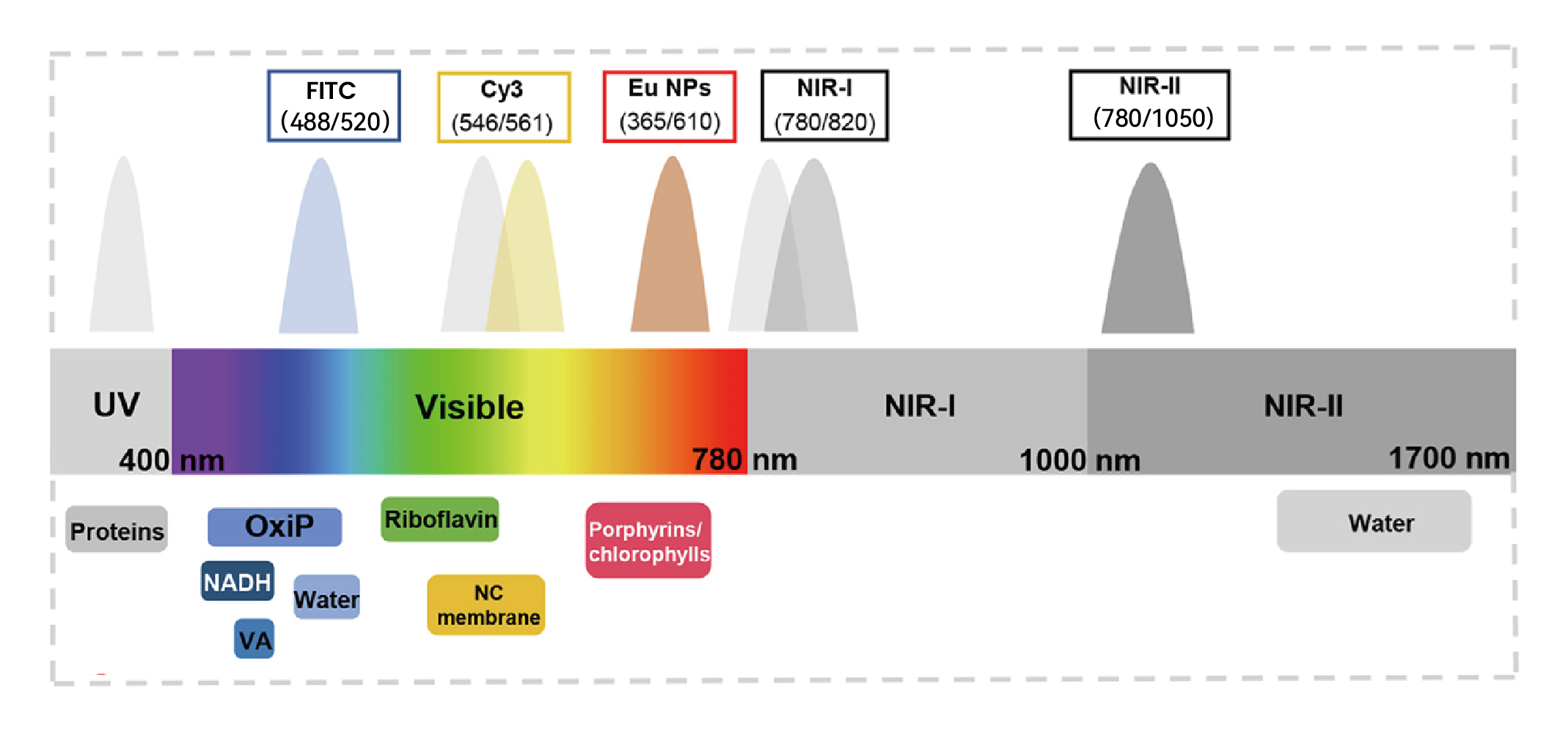
Note: FITC: fluorescein isothiocyanate; Cy3: Cy3 fluorescent dye; Eu NPs: lanthanide chelate nanoparticles; Proteins: proteins; VA: vitamin A; OxiP: fluorescent oxidation products; NADH: reduced nicotinamide adenine dinucleotide; NC membrane: nitrocellulose membrane; Riboflavin: riboflavin; Porphyrins/chlorophylls: porphyrins/chlorophyll; Water: water.
Biological tissue absorbs and scatters light differently across spectral bands, which determines the “readability” of every detection window. Conventional IVD platforms rely on visible light (400–780 nm) and the first near-infrared window (NIR-I, 700–900 nm), where strong tissue autofluorescence and optical scattering severely limit detection sensitivity and quantitative accuracy.
Compared to traditional visible light and NIR-I fluorescence, NIR-II region (1000–1700 nm) fluorescence exhibits deeper tissue penetration, lower background noise, and a higher signal-to-noise ratio. WWHS employs a unique encapsulation process to stably encapsulate hydrophobic NIR-II fluorescent dyes within polymer microspheres, ultimately preparing monodisperse functionalized nanospheres with a fluorescence quantum efficiency exceeding 20%. Infrared fluorescent POCT reagents developed based on these microspheres can be excited at 780 nm and detected at fluorescence levels above 1000 nm. Compared to traditional methods, NIR-II technology possesses stronger anti-interference capabilities, completely eliminating interference from the sample's own autofluorescence; simultaneously, leveraging the strong penetrating power of infrared light, it achieves 3D stereoscopic signal detection, reduces fluorescence scattering effects, and significantly improves detection sensitivity.
Compared to traditional methods, NIR-II fluorescence technology comprehensively raises the boundary of detection performance.
NIR-II fluorescence enables picogram-level (pg) detection, meeting the demands of precision diagnostics at the primary-care level.
Low CV and excellent reproducibility meet the precision requirements of clinical testing, with stable and reproducible batch-to-batch results.
Results remain stable even on hemolyzed, icteric, and lipemic samples; complex samples no longer affect result interpretation.
WWHS achieves not just isolated breakthroughs, but physical-level system integration across the light source, nanospheres, and detector.
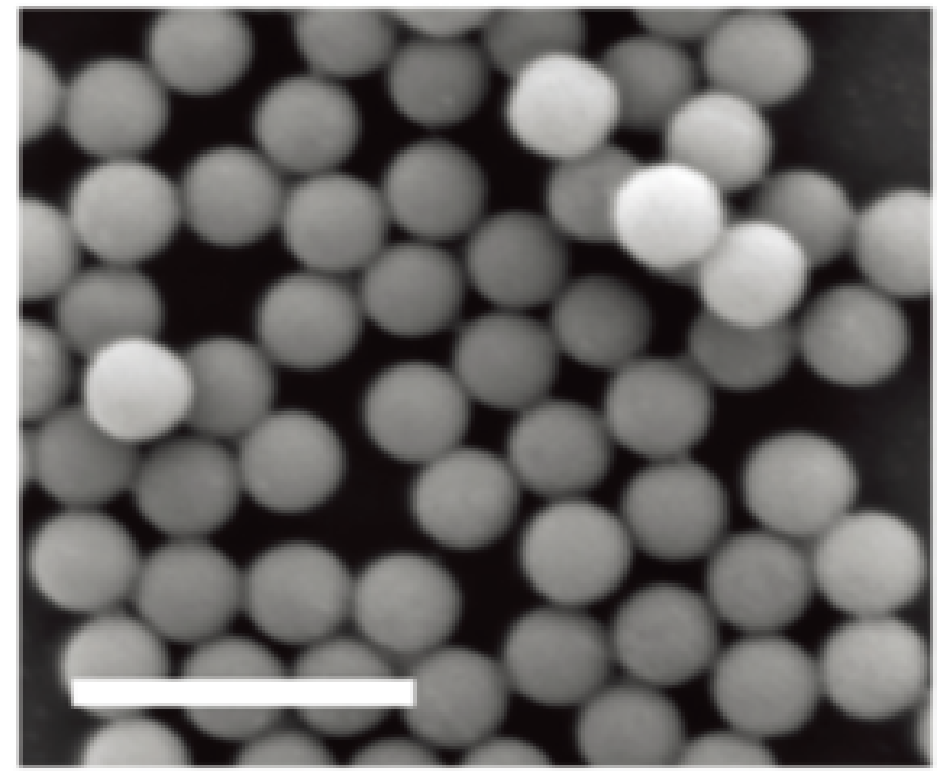
In-house-developed nanospheres with a Stokes shift > 300 nm, robust against interference from hemolyzed, icteric, and lipemic samples.
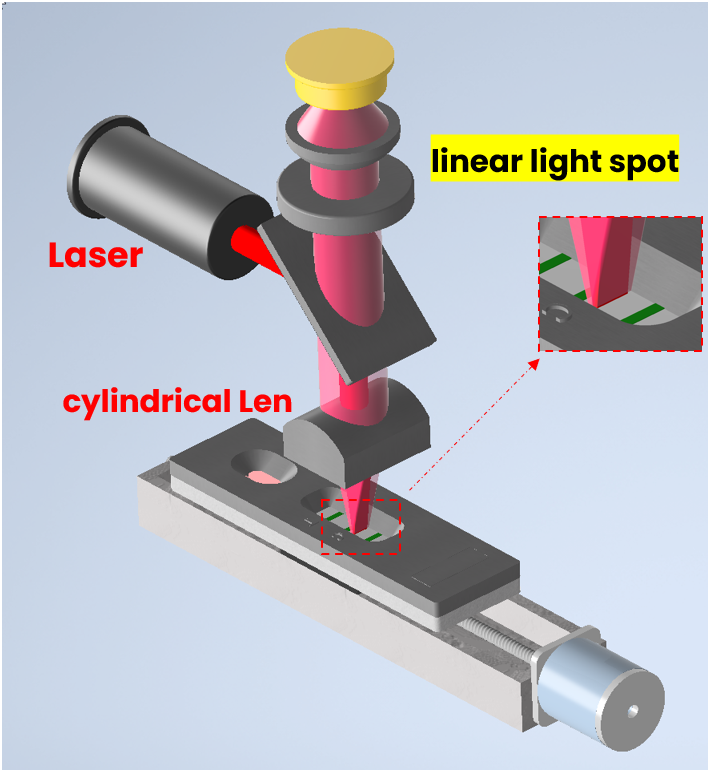
A customized NIR-II excitation source eliminates sample autofluorescence and dramatically improves signal clarity; the line-source design delivers a step-change in physical performance.
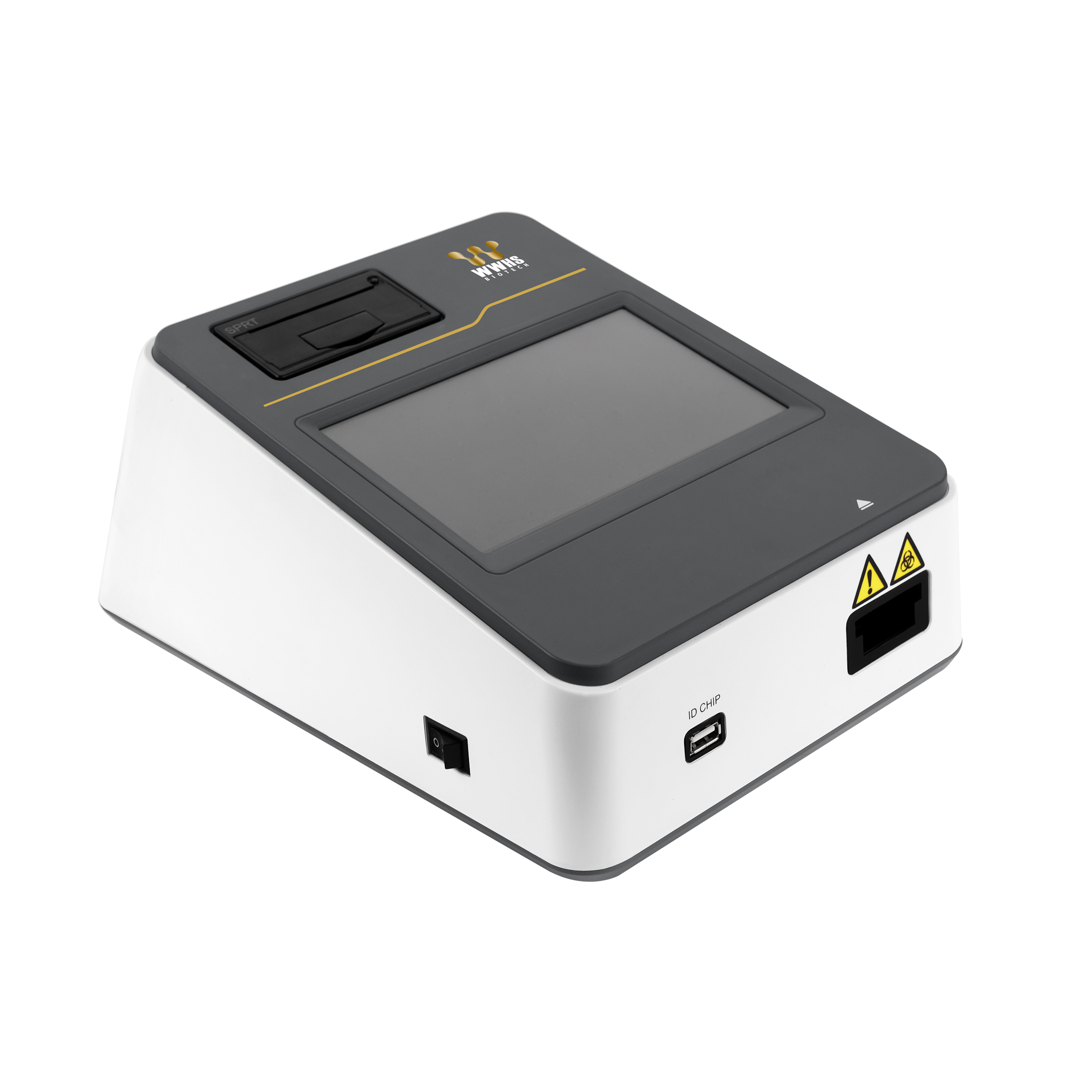
Light source + nanospheres + detector co-engineered at the physical level, achieving full-stack leadership from optical path to signal chain.
The company has filed more than 40 patents, including 1 granted U.S. patent, 8 Chinese invention patents, and 9 utility model patents, building an IP moat covering fluorescent materials, nanosphere fabrication, detection methods, and other core stages.
Covering hospital detection of common and frequent diseases, primary-care chronic disease continuous monitoring and management, and disease early-warning needs.
For product specifications, application solutions, and technical support, welcome to contact the WWHS technical team.


